Choosing, ordering and paying for cemetery monuments and grave markers
Setting a monument after a burial, and why the whole sequence takes a year
From the interment right on file to the crew that pours the foundation, the order a monument follows, how long each step takes, and what the waiting costs.
Right of interment, not land
A cemetery plot purchase conveys a burial right recorded on a deed or certificate, not ownership of the ground itself. Only the named holder, or someone with their written consent, can authorize a monument.
Read next
Terms
- Transferring the deed after a death
- When the person named on the interment right has died, the right passes by will, by state succession law, or through the cemetery's own transfer form. Expect a small recording fee and a wait of days at the counter or weeks by mail.
- Why soil compaction matters
- Backfill over a grave settles unevenly for months, and freeze-thaw cycles move it further. A stone set too early can lean, and straightening it means excavating and resetting the base.
- Typical waiting period
- Most cemeteries require six months to a year between burial and setting a permanent marker. Northern cemeteries with hard winters tend to enforce the longer end.
- 01
Temporary markers
Funeral homes commonly supply a flat plate or small metal frame at little or no cost to identify the grave during the wait. It also removes the pressure to choose lettering during the first few weeks.
- 02
When to place the order
Ordering roughly two to four months before the cemetery will allow setting usually lines the two timelines up. Ordering much earlier just means a longer gap between deposit and delivery.
- 03
Manufacturing lead times
Standard gray granite in a common size often runs eight to twelve weeks from approved drawing to delivery. Imported color, hand carving or portrait etching can push that to five or six months.
Dealers typically take a third to a half at signing, with the balance due before setting. The price is fixed at the time of order rather than at delivery.
A grave without a marker looks like nothing is happening, and for the first several months that is close to true. The sequence that ends with a stone standing over a plot begins in a filing cabinet in the cemetery office, moves through a period of deliberate inactivity while the ground compacts, and only then reaches the dealer who will cut the granite. Families who understand the order of it stop calling the cemetery every three weeks. Families who do not tend to place an order early, pay a deposit, and then wait anyway.
The interment right is the document that starts everything
Buying a grave does not buy the land. What changes hands is a right of interment, recorded on a deed or certificate that names one or more holders, and that right carries the authority to say what goes on the plot. Cemeteries will not accept a monument order from a person who is not on that document, or who cannot produce written consent from whoever is. When the holder has died, the right passes by will, by state succession statute, or by the cemetery's own transfer procedure, and the transfer typically involves a form, a modest recording fee, and sometimes a death certificate.
Sorting this out is the cheapest step in the entire sequence and the one most likely to stall it. A transfer that takes twenty minutes at the office counter can take six weeks by mail, and longer if an estate is open and an executor has to sign. Ask the cemetery early who is listed and what they need. If several siblings hold the right jointly, get their signatures while everyone is still in the same city, because collecting them later, one at a time, has delayed more monuments than any quarry ever did.
The ground is left alone on purpose
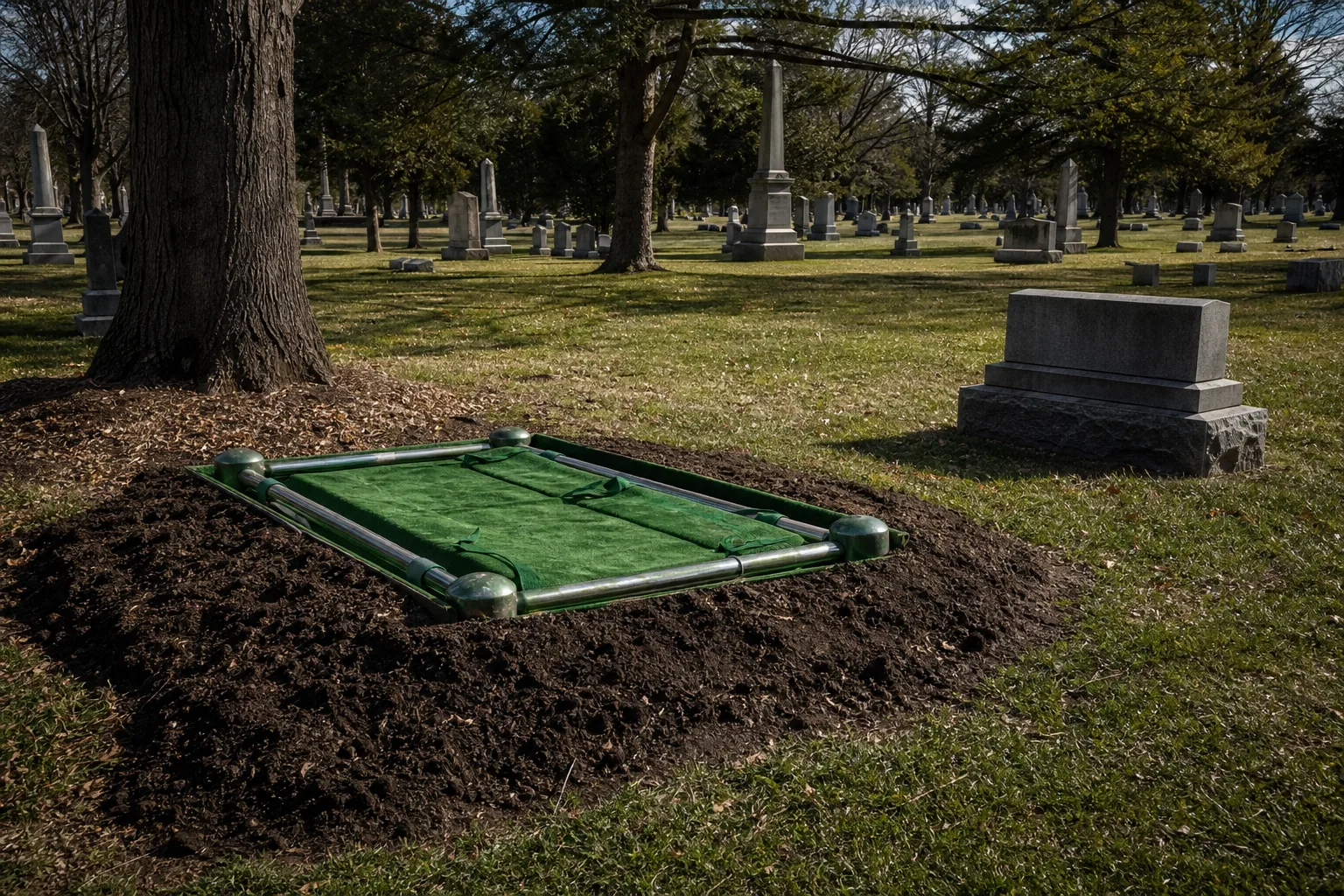
Backfilled soil over a burial compacts unevenly for months. Rain accelerates it, freeze and thaw cycles rearrange it, and the surface can drop several inches before it stops moving. A monument set on ground still in motion will tilt, and a tilted stone is not a cosmetic problem: correcting it means excavating, repouring or resetting the base, and lifting granite that may weigh several hundred pounds. Most cemeteries impose a waiting period for exactly this reason, commonly six months to a year, and the ones in cold climates are stricter about it.
Some cemeteries shorten the wait if the grave was fitted with a concrete outer burial container and the backfill was mechanically tamped, which is worth asking about rather than assuming. Others allow a temporary marker in the meantime, usually a flat plate or a small metal frame supplied by the funeral home at little or no cost. That temporary marker does real work. It gives visitors somewhere to stand, and it keeps the family from ordering a permanent stone in the first raw weeks, when decisions about lettering and design are hardest to make well.
When the order actually goes to the dealer
The practical moment to order is roughly two to four months before the cemetery will permit setting, because the manufacturing chain is longer than most people expect. A dealer takes the order, drafts a layout for approval, sends it to a plant for sandblasting and carving, and then waits for a truck. Standard gray granite in a common size may run eight to twelve weeks from approved drawing to delivery. Imported color, hand carving, a portrait etching, or a ledger that has to be quarried to size can stretch that to five or six months.
Deposits are usually a third to a half at signing, with the balance due before setting, and price is agreed at order rather than at delivery. The dealer should ask for the cemetery's rules before quoting a headstone, because permitted dimensions, base requirements and finish restrictions vary by section within a single cemetery. Expect to sign a proof showing every letter and date at full arrangement. Read the dates twice and the spelling of names three times, since a recut after blasting is a new stone, not a repair, and it is billed accordingly.
Permits, foundations and setting day
Before anything is delivered, the cemetery issues a setting permit and charges a foundation fee, generally priced by the square inch or the linear foot of base and payable to the cemetery rather than the dealer. Crews pour foundations in batches, weather permitting, and in the northern half of the country pouring stops once the ground freezes, which quietly moves a November delivery to April. The Federal Trade Commission oversees the disclosure practices of funeral providers, and the same instinct applies here: get every fee, including the foundation charge, itemized in writing before you pay a deposit.
Setting itself takes under an hour. A two or three person crew arrives with a hoist or a tripod, beds the base on the cured foundation, sets the die with a setting compound, levels it, and cleans the faces. Nobody is required to attend. Many families prefer to come the following weekend, to see the stone standing on settled ground with the grass grown back over it, which is the version they will remember.
Counted end to end, twelve to eighteen months from burial to a set monument is ordinary rather than slow. The interval is not lost time. It is the interval in which the plot rights get cleared, the soil stops moving, the wording gets decided rather than guessed at, and the foundation cures under a stone meant to stand for a century.
One monument order followed all the way through, from the cemetery office to the dealer to the crew that poured the foundation, with the figures and rules that came back at each step.
Foundation fee and permit